
„It’s behaviour—it’s always variable!”
We’ve all heard those words. Usually, when a behavioural experiment failed to clarify anything—or worse, when a promising result didn’t replicate in a new cohort. And it happens all too often.
The outcome of an experiment can hinge on countless subtle factors: the time of day, the sex of the experimenter, the exact shelf location in the animal facility, or how the animals are moved between rooms. The same genetic mutation can produce opposite behavioural results in different mouse strains.
This complexity and context dependence can be mind-boggling. But there is no way around it: we cannot understand the brain without understanding behaviour.
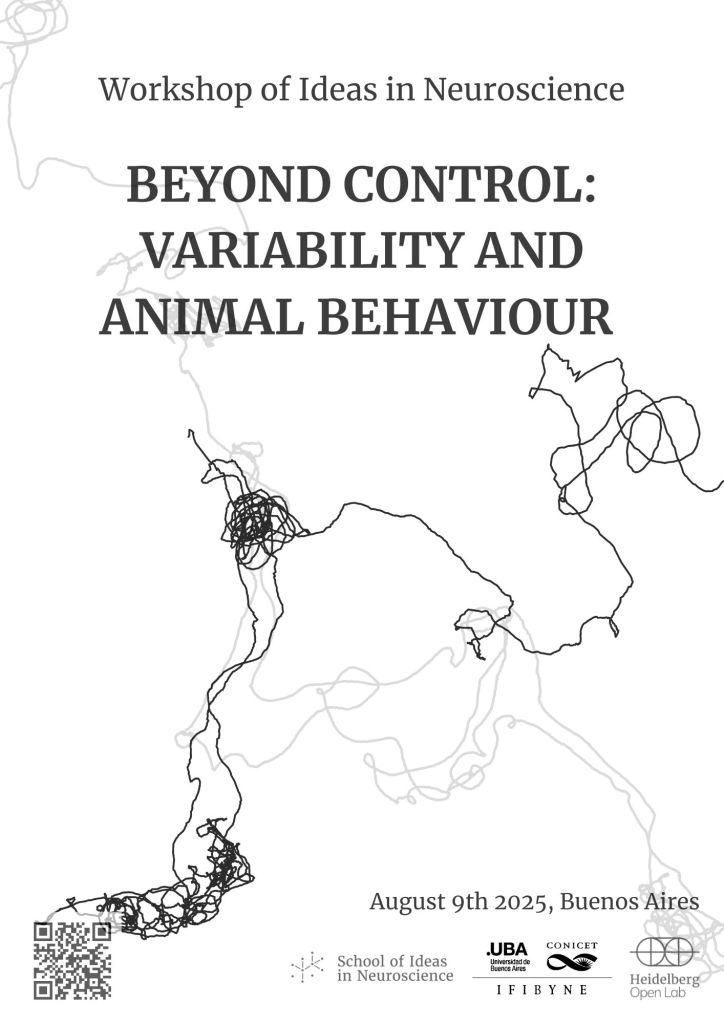
The aim of this workshop is to explore the complexity, variability—and also the robustness—of behaviour. It will consist of short talks, discussions, and group tasks, during which we will work together to develop a methodological guide to help us navigate this challenging landscape.
The questions we would like to explore together include:
- How do we deal with behavioural variability?
- How can we interpret it—and even take advantage of it?
- What can behavioural variability reveal about brain function?
- How can we predict which factors will influence the behaviours we study?
- How should we approach the emerging field of naturalistic neuroscience?
- How can incorporating an animal’s ecology help us answer our research questions more effectively?
This workshop will be held in the spirit of our Schools of Ideas—with an informal atmosphere and an open exchange of thoughts and perspectives.
Instructors:
- Anna Chrzanowska (Paris Brain Institute)
- Mateusz Kostecki (Heidelberg University)
- Martina Radice (University of Buenos Aires, CONICET)
- Alejandro Camerra (University of Buenos Aires, CONICET)
Participation is free of charge. You can find the application form here.
Application deadline: July 25th.
 Nencki Open Lab