News

Statistics Workshop, Feb 24th

We are happy to announce our first workshop on statistics!

During the workshop, we will discuss the principles of choosing the right statistical test and their assumptions, including nonparametric tests, an introduction to regression analysis, interpretation and description of its results, basics of visualization, and a statistical approach to more complex analyses. The workshops will combine theoretical introduction with practical exercises in R, so at least a basic knowledge of R syntax is recommended.

The course will be held on Saturday, February 24th at 10:00 AM at Nencki Institute. The cost of participation is 100 PLN. By applying for the workshop you confirm that you accept the rules of attendance. Please find the registration form HERE.

About the instructor:

Zuzanna Nowicka is a medical doctor and a PhD student at the Department of Biostatistics and Translational Medicine at MULodz. Her doctoral research, funded by grants from the Preludium Bis and Preludium NCN and NAWA, focuses on the immunogenic effects of radiotherapy in lung and rectal cancers. She has been practicing biostatistics for 6 years, analyzing data from scientific projects, teaching students, and conducting workshops.
3D printing workshop, Feb 9th

We have a pleasure to announce our next workshop on 3D printing!

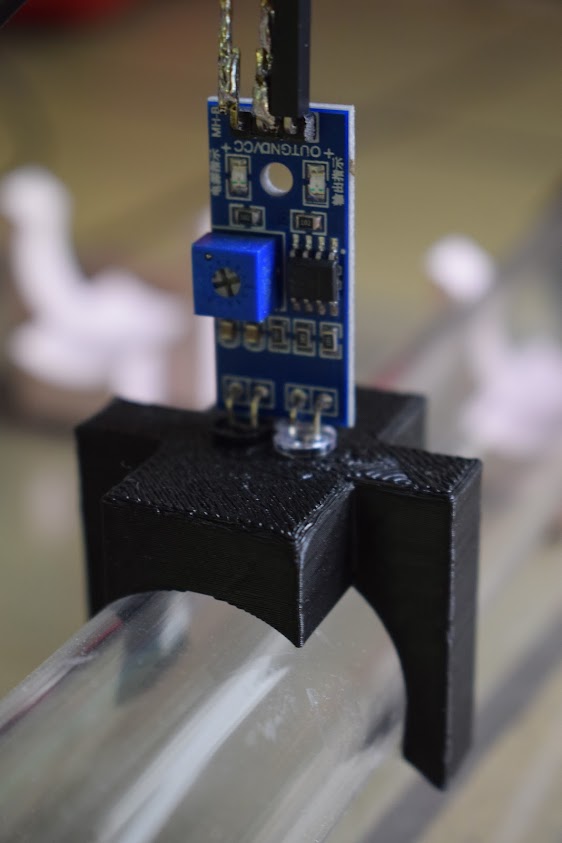
Additive manufacturing, commonly known as 3D printing is a rapidly developing subfield of fabrication. Unprecedented versatility and constant decrease in prices of both the software and the hardware contribute to the growing popularity of 3D printing. The ability to create and at hand manufacture almost any object needed may greatly improve the capacity and cost-effectiveness of the development of highly customised experimental setups. We would like to present the possibilities and limitations of the academic applications of 3D printing.

During the workshop participants will be acquainted with an overview of 3D printing technologies, the construction of FDM printers and the workflow of design, printing and postprocessing of desired objects.

The workshop will take place on February 9th from 10:00 AM till 3:00 PM in our Makerspace at Nencki Institute. Please find the application form here. We are waiting for the applications till February  7th. The cost of the workshop is 100 PLN. 

Contact: m.kostecki@nencki.gov.pl

Macro Programming in ImageJ, Jan 19th

We are happy to announce the 4th edition of our ImageJ workshop!

ImageJ is an open source image processing software designed for scientific image analysis. Its most often used distribution is called Fiji. This software has a lot of built-in functions and plugins. ImageJ has its own programming language based on Java. As scientists, we often want to perform image analysis on large datasets (detecting hundreds of particles on hundreds of images). If you don’t want to click the dots for all eternity, writing a macro is the perfect solution.

During this workshop you will learn how to automate some of your analyses by writing simple macros in ImageJ. Prerequisites for this workshop are basic skills in any programming language as well as basic knowledge of what ImageJ can do.

Workshop will take place January 19th, 10 AM – 2 PM. Please find the application form HERE. We wait for applications until January 19th. The cost of the workshop is 100 PLN.

Please install Fiji before the workshop (https://fiji.sc/).

Kacper Łukasiewicz is a neuroscientist; he works at Experimental Medicine Centre, Medical University of Bialystok and Department of Psychiatry, Medical University of Bialystok. During his PhD in the Laboratory of Molecular Basis of Behavior in Nencki Institute he worked on alcohol-induced memory impairment and analyzed hundreds of images from immunostainings (and saved hundreds of hours using ImageJ macros for this).

Organizing scientific events, Nov 30th


We are happy to announce our soft skill workshop!

Organizing scientific events – workshops, summer schools, conferences, symposia – seems like a complex and overwhelming endeavor. You need to design the structure of your event, secure funding, invite guests, promote it, proceed payments and contact participants; you need to take care of catering, flights, hotels, and dates.

It is a lot, but with a proper approach, some knowledge – and people around you – you can organize a successful event even with limited resources.

During our workshop you will learn how:

  • design your event, select its target and set goals
  • secure funding: find sponsors, write grant applications
  • promote your event on social media and mailing groups
  • how to approach graphic design
  • how to contact guests and prepare invitations
  • how to proceed funding: event fees, grants, sponsors money
  • how to ensure good atmosphere
  • what to do afterwards

And much more!

The event will take place on Thursday, Nov 30th at Nencki Institute, 11 AM – 1 PM. The cost of the workshop is PLN 50. Please find the application form here: https://forms.gle/fNVBiZLibyzLde6J7

Basic Arduino Workshop, March 8th

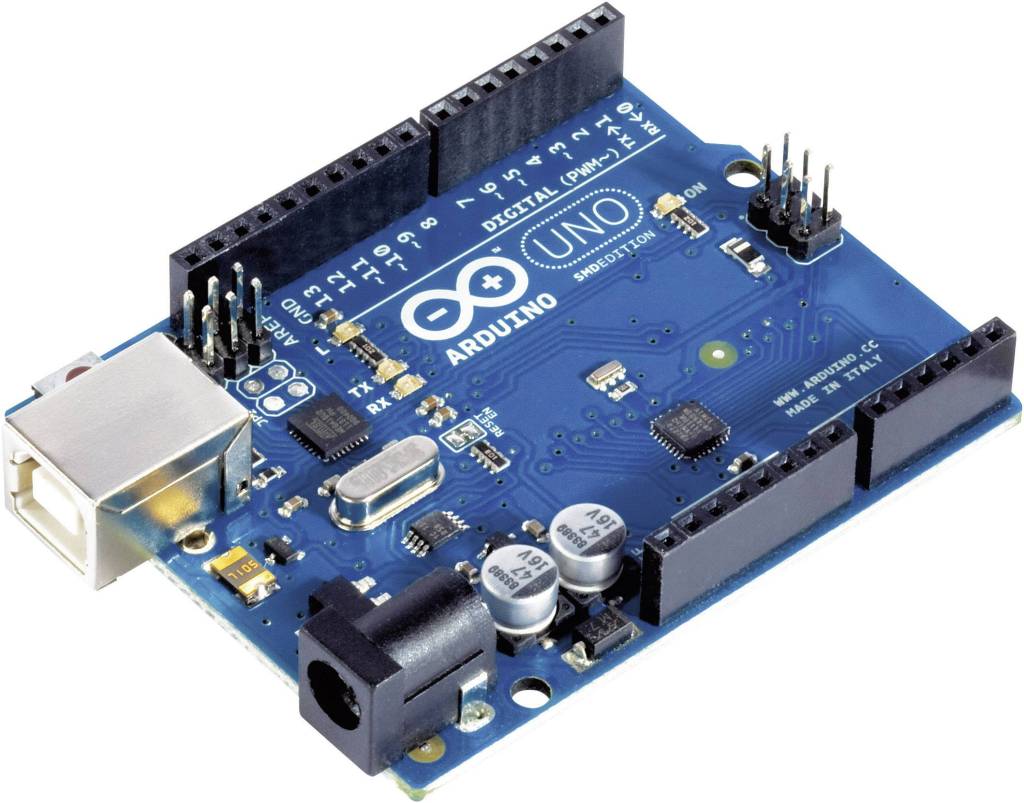
Arduino is an easy-to-learn and easy-to-use microcontroller platform that gives almost infinite possibilities. It allows you to make devices that can improve and automatize your research or hobbyist projectsn such as: temperature, light, humidity sensors that save the data on your computer or on a SD card, automated behavioral setups, lickometers, robots, drones and much more!

During the workshop, you will learn basics of Arduino; you will work with different types of sensors, diodes, motors, and other elements. The workshop will give you the knowledge and skills necessary to make useful lab devices by yourself. No previous knowledge of electronics or programming is required!

The workshop will take place 10:30AM – 4:30 AM in A room at Nencki Institute. Please find the application form here. The deadline for applications is March 6thth. The cost of the workshop is PLN 30.

Cajal – Nencki Open Lab Bonsai Course, Feb 6 – 10th

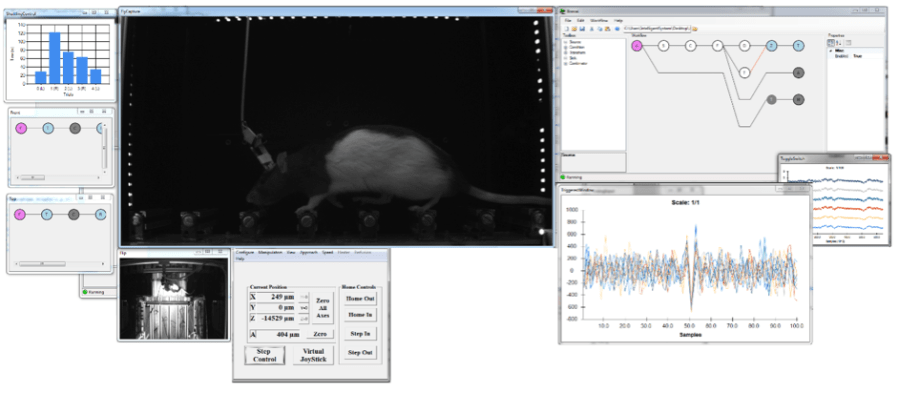
From 6th to 10th of February 2023 we are pleased to invite you to a thorough course on Bonsai visual reactive programming language, organized in a collaboration with Cajal Advanced Neuroscience Training Programme. Bonsai is an open-source, high-performance, and flexible environment for designing closed-loop neuroscience experiments combining physiology and behavioral data. It has allowed scientists with no previous programming experience to quickly develop and scale-up experimental rigs and can be used to integrate new open-source hardware and software.

During this course you will learn to:

  • create data acquisition and processing pipelines for video and visual stimulation.
  • control behavioral task states and run your closed-loop experiments. – collect data from cameras, microphones, Arduino boards, electrophysiology devices, etc.
  • achieve precise synchronization of independent data streams.

We will be joined by an expert from University College London, dr Thomas Ryan, who has taught Bonsai in a past as a part of Cajal Programme team.

The cos of the workshop is EUR 150. Please find the registration form HERE.

Nencki Open Lab Retreat

We are happy to announce our 2022 retreat!

It will be a great opportunity to join our project, learn what we do and discuss your research (or research ideas!) with us!

We are organizing an event that will combine integration, scientific activities, and workshops, and will be a great opportunity to join our project!. 

The schedule includes informal short seminars by all participants about our research projects –  the main intention here is to provide a forum for you to highlight any challenges that you’ve encountered (with techniques, equipment, data analysis, or something else) so that we can discuss and support each other as a community. We will also organize a short (2h) workshop about the organization of scientific events – workshops, symposia, conferences, and summer schools. 

2021 retreat

Other activities may also include: walking around, playing board games, and talking. A lot of talking.

Retreat will be organized 5-6 November in Nałęczów in Eastern Poland. The cost of accomodation is covered by our project!

Please fill the registration form HERE.

Nencki Open Lab Python Course

We are happy to announce the second edition of our Python course!

The course will provide you with a computer hardware overview and the basics of Python programming. You will use open source tools for data analysis and visualization with packages such as NumPy, Pandas and Matplotlib (and don’t worry if these words don’t mean anything to you, we will start with the basics); the course will improve your programming and analytical skills. Towards the end of the course, you will have the opportunity to implement these skills on a group project.

The course is meant to be general, but if you have any specific questions concerning the use of Python in your everyday research practice, we will be happy to answer them!  

Prerequisites for this course are strong motivation, capacity to participate in all classes and a laptop.

Contact: openlab@nencki.edu.p

The workshop will take place 9:30 AM – 11:30 AM on Mondays, starting November 14th, until the half of February. Please find the registration form here. We wait for applications until Oct 29th.  The room will accommodate up to 10 participants. The fee is 500 PLN. If you are not eligible for any funding, just let us know, we can provide you with a discount!

Instructors:

Urszula Włodkowska (Laboratory of Spatial Memory)

Ilke Guntan (Laboratory of Epileptogenesis

Konrad Danielewski (Laboratory of Emotions Neurobiology)

Mateusz Kostecki (Laboratory of Emotions Neurobiology)

Justyna Wiśniewska (Laboratory of Neuronal Plasticity)

Quantitative mass spectrometry in practice workshop, April 25th

We would like to invite you to our next workshop! This time we will cover basics of quantitative mass spec with two instructors from Mass Spectrometry Laboratory, Institute of Biochemistry and Biophysics Polish Academy of Sciences, Bianka Świderska and Agata Malinowska. The plan for the workshop includes:

  1. (1 hour) Proteomics methods and sample preparation (Bianka Świderska)
  • overview of qualitative and quantitative proteomic methods
  • novel possibilities available with Orbitrap Exploris 480 platform
  • sample preparation methods for MS analysis
  • most common contaminants
  • Q&A
    break 15 min
  1. (1 hour) Data analysis (Agata Malinowska)
  • quantitative estimates in MS (semi-quantification, relative and absolute
    quantification)
  • label-free quantification
  • isotope labeling (MS/MS-based quantification)
  • data-independent analysis
  • targeted analysis
  • quantification of post-translational modifications
  • visualization
  • Q&A

The workshop will take place on April 25th, 10AM – 12:30 PM. Please find the form HERE.

Macro Programming in ImageJ, March 18th

We are happy to announce the third edition of our ImageJ workshop!

ImageJ is an open source image processing software designed for scientific image analysis. Its most often used distribution is called Fiji. This software has a lot of built-in functions and plugins. ImageJ has its own programming language based on Java. As scientists, we often want to perform image analysis on large datasets (detecting hundreds of particles on hundreds of images). If you don’t want to click the dots for all eternity, writing a macro is the perfect solution.

During this workshop you will learn how to automate some of your analyses by writing simple macros in ImageJ. Prerequisites for this workshop are basic skills in any programming language as well as basic knowledge of what ImageJ can do.

Workshop will take place March 18th, 9AM – 3 PM. Please find the application form HERE. We wait for applications until March 18 th. The cost of the workshop is 60 PLN.

Please install Fiji before workshop (https://fiji.sc/).

Kacper Łukasiewicz PhD, is a postdoctoral scholar in the Zuo Laboratory, MCD Biology, University of California, Santa Cruz. During his PhD in the Laboratory of Molecular Basis of Behavior in Nencki Institute he worked on alcohol-induced memory impairment and analyzed hundreds of images from immunostainings (and saved hundreds of hours using ImageJ macros for this).