News

Deep Lab Cut Workshop, Feb 11th

Due to popular demand we’re doing a second workshop on
DeepLabCut!


This pose estimation framework developed in Mackenzie Mathis Lab is used to track arbitrarily selected body parts of an animal from your video data, thus giving you an opportunity to extract much richer information about animal’s behaviour in your paradigm. Aim of this workshop will be to learn how to use DeepLabCut in multianimal pose estimation – you will be able to analyze behavioral data from social interaction between animals.


We will be creating a project either on provided or own data and will
go through the whole workflow, closely examining the most
imgo through the whole workflow, closely examining the most important steps, trying to overcome the most common new user hurdles as well as built upon our knowledge from previous DLC workshops.


To take part in our workshop, all you’ll need is a laptop (Windows, Linux, MacOS are all fine). All instructions on how to install necessary software will be provided before the workshop and participants are expected to have everything installed on the day of the workshop – contact k.danielewski@nencki.edu.pl in case of any issues.


Participants without previous experience with DLC are most
welcome! Please find the application form HERE; the cost of the workshop is 30 PLN. The workshop will be organized in a stationary manner, unless COVID situation will make us unable to do so.
Basic Arduino Workshop, March 8th

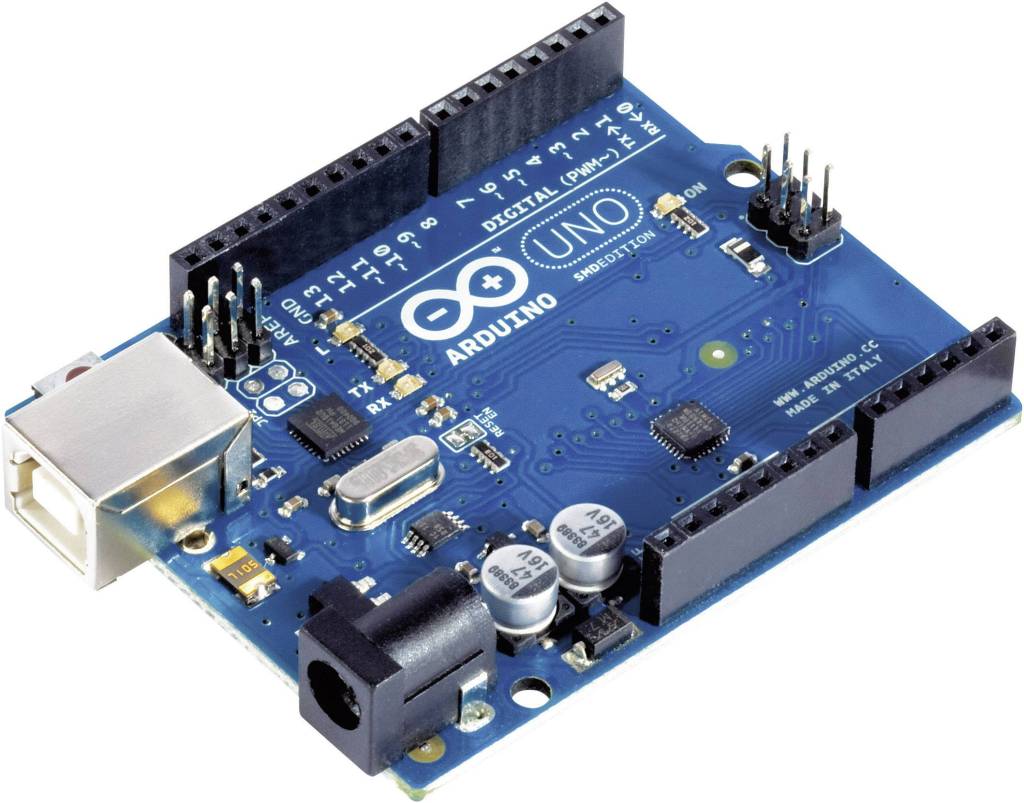
Arduino is an easy-to-learn and easy-to-use microcontroller platform that gives almost infinite possibilities. It allows you to make devices that can improve and automatize your research or hobbyist projectsn such as: temperature, light, humidity sensors that save the data on your computer or on a SD card, automated behavioral setups, lickometers, robots, drones and much more!

During the workshop, you will learn basics of Arduino; you will work with different types of sensors, diodes, motors, and other elements. The workshop will give you the knowledge and skills necessary to make useful lab devices by yourself. No previous knowledge of electronics or programming is required!

The workshop will take place 10:30AM – 4:30 AM in A room at Nencki Institute. Please find the application form here. The deadline for applications is March 6thth.

Nencki Open Lab Python Course, Oct – Jan, Mondays 10 AM – 12 PM

The course will provide you with a computer hardware overview and the basics of Python programming. You will use open source tools for data analysis and visualization with packages such as NumPy, Pandas and Matplotlib (and don’t worry if these words don’t mean anything to you, we will start with the basics); the course will improve your programming and analytical skills. Towards the end of the course, you will have the opportunity to implement these skills on a group project.

The course is meant to be general, but if you have any specific questions concerning the use of Python in your everyday research practice, we will be happy to answer them!  

Prerequisites for this course are strong motivation, capacity to participate in all classes and a laptop. People who attend more than 80 % of the course will be eligible for 2 ECTS credits

Contact: nenckiopenlab@gmail.com

The workshop will take place 10AM – 12PM on Mondays, starting Oct 18th, until late January. Please find the registration form here. We wait for applications until Oct 12th.  The room will accommodate up to 12 participants. The fee is 750 PLN. If you are not eligible for any funding, just let us know, we can provide you with a discount!

Instructors:

Andrew Want (Laboratory of Preclinical Testing of Higher Standard)

Łucja Doradzińska (Laboratory of Brain Imaging)

Urszula Włodkowska (Laboratory of Spatial Memory)

Aleksander Zębrowski (Laboratory of Brain Imaging)

Natalia Rutkowska (Laboratory of Brain Imaging)

Ilke Guntan (Laboratory of Epileptogenesis)

Katarzyna Skowrońska (University of Warsaw)

Mateusz Kostecki (Laboratory of Emotions Neurobiology)

Basic electronics for neuroscientists, Oct 28-29 th

Basic knowledge in electronics is necessary prerequisite for every neuroscientist. You will need it to build your own amplifier to record a sniffing pattern of a mouse; it will allow you to fully understand how is your electrophysiological setup working and to appreciate what is really happening inside of a cell during an action potential.

This workshop is intended to provide you with theoretical and practical knowlege about electronics:

  • Theoretical introduction – current, voltage, resistance, Ohm’s Law, Kirchoff’s laws
  • Basic tools in electronics – multimeters, oscilloscopes
  • Resistors, diodes, capacitors
  • DC and AC
  • Filters, amplifiers
  • Analog sensors, motors, servos
  • Transistors, switches, logic gates, integrated circuits

Participants will receive kits with all the necessary elements; the workshop will be focused on practical exercises.

The cost of the workshop is 70 PLN. You can find the application form HERE.

Workshop will be organized between 9AM – 4 PM.

TAs:

Mateusz Kostecki is a PhD student in Nencki Institute. He works on social transmission of information in rodents; he is interested in nervous system evolution, electronics and robotics.

Ula Włodkowska Ula Włodkowska is a PhD student in Spatial Memory Lab at Nencki. She works on spatial engram evolution at different time points during learning and changes in involvement of hippocampal-cortical interactions throughout the process. A former software developer, she is interested in computational neuroscience, electronics and IoT.

Deep Lab Cut Workshop, Sept 23 th

DeepLabCut is a pose estimation framework developed in Mackenzie Mathis Lab, used to track arbitrarily selected body parts of an animal from your video data. Aim of this workshop will be to learn how to use DeepLabCut in multianimal pose estimation and what to do with the data.

We will be creating a project either on provided or own data and will go through the whole workflow, closely examining the most important steps, trying to overcome the most common new user hurdles as well as built upon our knowledge from previous DLC workshops. We will also cover basics of DLC tracking data analysis: ROI analysis, measurment of thedistance covered by an animal and its velocity.

To take part in our workshop, all you’ll need is a laptop (Windows, Linux, MacOS are all fine). All instructions on how to install necessary software will be provided before the workshop and participants are expected to have everything installed on the day of the workshop – contact k.danielewski@nencki.edu.pl in case of any issues. Participants without previous experience with DLC are most welcome!

Workshop will take place Sept 23th at 10 AM in Nencki Institute. Please find the application form here.

TA:

Konrad Danielewski is a PhD student in Knapska Laboratory. He is interested in using machine learning methods for behavioural data analysis. He is a member of Deep Lab Cut team.

Behavioral experiment design with Bonsai and Arduino, Jun 30 – Jul 2nd

bonsai

We are happy to announce our new workshop – Behavioral experiment design with Bonsai and Arduino.

Bonsai is an open visual programming language used in neuroscience for the development of behavioural paradigms with animal and human subjects. You can use Bonsai to track an animal with a camera, deliver visual or auditory stimuli, create virtual reality and combine it with Arduino to control lasers, automated doors, stimulus delivery systems and synchronize different setups – and many, many more. 

More about Bonsai can be found here.

The aim of the workshop will be to develop a closed – loop behavioural paradigm, in which a robot will be tracked and the environment will change depending on its behavior. You will learn the basics of Bonsai and Arduino programming. During the last day of the project, you will be also able to discuss your ideas and ask us how to implement skills from the workshop in your everyday research practice.      

 
Please find a registration form here .

Contact: nenckiopenlab@gmail.com

The workshop will take place 10AM – 3 PM each day. The fee is 120 PLN.

Macro Programming in ImageJ, Jun 11th

We are happy to announce the second edition of our ImageJ workshop!

ImageJ is an open source image processing software designed for scientific image analysis. Its most often used distribution is called Fiji. This software has a lot of built-in functions and plugins. ImageJ has its own programming language based on Java. As scientists, we often want to perform image analysis on large datasets (detecting hundreds of particles on hundreds of images). If you don’t want to click the dots for all eternity, writing a macro is the perfect solution.

During this workshop you will learn how to automate some of your analyses by writing simple macros in ImageJ. Prerequisites for this workshop are basic skills in any programming language as well as basic knowledge of what ImageJ can do.

Workshop will take place June 11th, 11AM – 3 PM. Please find the application form HERE. We wait for applications until May 20 th. The cost of the workshop is 60 PLN.

Please install Fiji before workshop (https://fiji.sc/).

Kacper Łukasiewicz PhD, is a postdoctoral scholar in the Zuo Laboratory, MCD Biology, University of California, Santa Cruz. During his PhD in the Laboratory of Molecular Basis of Behavior in Nencki Institute he worked on alcohol-induced memory impairment and analyzed hundreds of images from immunostainings (and saved hundreds of hours using ImageJ macros for this).

Basic electronics for neuroscientists, June June 14-16 th

Basic knowledge in electronics is necessary prerequisite for every neuroscientist. You will need it to build your own amplifier to record a sniffing pattern of a mouse; it will allow you to fully understand how is your electrophysiological setup working and to appreciate what is really happening inside of a cell during an action potential.

This workshop is intended to provide you with theoretical and practical knowlege about electronics – from Ohm’s law to basics of computer logic. The topics covered will include:

  • Theoretical introduction – current, voltage, resistance, Ohm’s Law, Kirchoff’s laws
  • Basic tools in electronics – multimeters, oscilloscopes
  • Resistors, diodes, capacitors
  • Analog sensors, motors, servos
  • Amplifiers
  • Transistors, switches, logic gates, integrated circuits (how computers work?)

Participants will receive kits with all the necessary elements; the workshop will be focused on practical exercises.

The cost of the workshop is 70 PLN. You can find the application form HERE.

Workshop will be organized between 9AM – 3 PM.

TAs:

Mateusz Kostecki is a PhD student in Nencki Institute. He works on social transmission of information in rodents; he is interested in nervous system evolution, electronics and robotics.

Ula Włodkowska Ula Włodkowska is a PhD student in Spatial Memory Lab at Nencki. She works on spatial engram evolution at different time points during learning and changes in involvement of hippocampal-cortical interactions throughout the process. A former software developer, she is interested in computational neuroscience, electronics and IoT.

Macro Programming in ImageJ, Oct 18th

ImageJ is an open source image processing software designed for scientific image analysis. Its most often used distribution is called Fiji. This software has a lot of built-in functions and plugins. ImageJ has its own programming language based on Java. As scientists, we often want to perform image analysis on large datasets (detecting hundreds of particles on hundreds of images). If you don’t want to click the dots for all eternity, writing a macro is the perfect solution.

During this workshop you will learn how to automate some of your analyses by writing simple macros in ImageJ. Prerequisites for this workshop are basic skills in any programming language as well as basic knowledge of what ImageJ can do.

Workshop will take place October 18th, 10AM – 3 PM. Please find the application form here. We wait for applications until Oct 10 th. The cost of the workshop is 60 PLN.

Please install Fiji before workshop (https://fiji.sc/).

Kacper Łukasiewicz recently finished his PhD in the laboratory of Molecular Basis of Behavior, Nencki Institute. During his PhD he worked on alcohol-induced memory impairment and analyzed hundreds of images from immunostainings (and saved hundreds of hours using ImageJ macros for this).

Join us!

As our Nencki Open Lab project is dynamically developing, we are currently looking for PhD students and other scientists Ochota Campus who would like to join us!

Our plans for the following year include: workshops: i.a. Matlab programming, optics (we plan to build a fluorescent microscope from scratch!), 3D printing, analysis of behavioural data, Arduino, electronics, LaTeX and others; the next edition Nencki Open Lab Summer School on Behavioral Neuroscience and weekly seminars.

There are many ways in which you can contribute to the project:

  • organizing workshops – preparing announcements, spreading information about workshops on social media, taking care of workshop logistics
  • organizing weekly seminars – inviting speakers, spreading the news
  • organizing Nencki Open Lab Summer School

Organizational meeting will take place October 2nd, 3:00 PM at Nencki. Please write to us at nenckiopenlab@gmail.com if you are interested!

See you soon!